
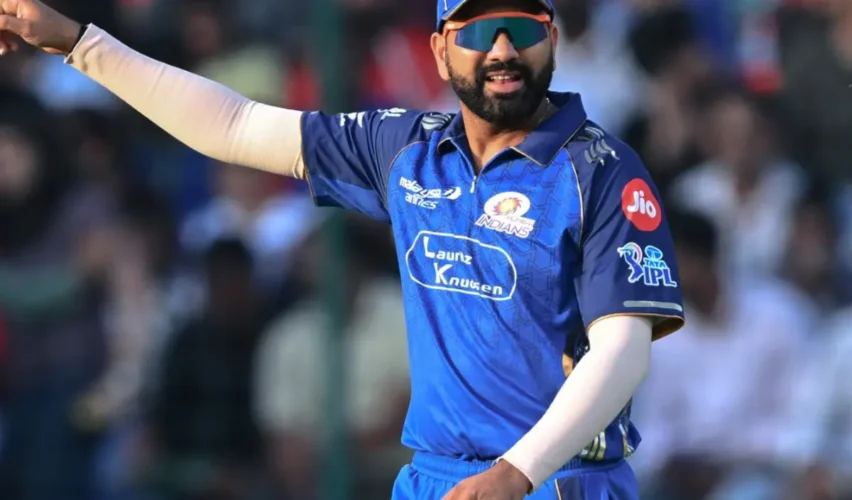
The Wankhede Stadium is built on noise. For over a decade, its concrete stands have shaken under the weight of a singular, deafening chant: “Rohit! Rohit!” It is a venue that has witnessed some of the most glorious chapters of Indian cricket, many written by the willow of the Hitman himself.
Yet, on this particular night in IPL 2026, the stadium experienced a different kind of intensity—a sudden, suffocating silence. A collective gasp escaped from thirty-odd thousand spectators as the former Mumbai skipper slowly turned around, looked at the umpire, and began the long, agonizing walk back to the dugout.
This wasn’t just a regular dismissal or a momentary lapse in concentration. This was a statistical disaster that etched Rohit Sharma’s name into a page of Indian Premier League history that he would desperately want to tear out. By falling for a duck on his home turf, Rohit registered his latest scoreless inning, cementing an unwanted record for the most ducks in the history of the IPL.
For a player whose legacy is defined by effortless elegance, double centuries, and five IPL trophies as a leader, this recurring nightmare brings forward a glaring, uncomfortable truth. The modern T20 game is evolving rapidly, and right now, Rohit’s traditional approach at the top of the order is catching him completely off guard.
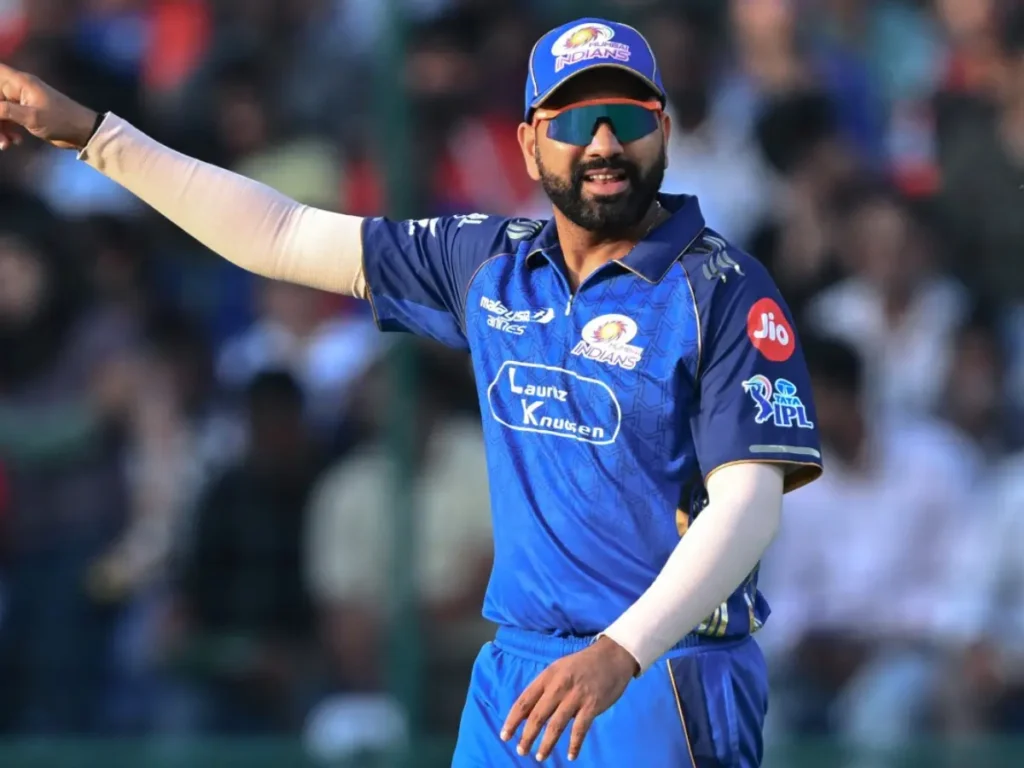
The Anatomy of the Dismissal: A Tactical Masterclass
Great batsmen rarely get out by accident in modern cricket; they get out because of deep, meticulous data profiling and tactical blueprinting. The opposition walked onto the field with a crystal-clear script on how to exploit Rohit Sharma’s early-innings vulnerabilities, and they executed it flawlessly.
In the shortest format, the first six balls a batsman faces are the most critical. This is when the feet are static, the eyes are adjusting to the pace of the deck, and the reflexes are running on pure muscle memory. The opposition opening bowler understood this perfectly, setting a trap that relied on high pace and late inward movement.
The Delivery Progression
- Delivery 1 (The Setup): A hard-length delivery clocked at 142 km/h, pitching on a fourth-stump line and angling across the right-hander. Rohit made a tentative push away from his body, his hands reaching for the ball without any significant feet movement. The ball whizzed past the outside edge, setting up the expectation of away-movement.
- Delivery 2 (The Killer Blow): Recognizing that Rohit’s front foot was clearing out early to compensate for the away swing, the bowler pulled his length back slightly and delivered a sharp, fast inswinger targeting the knee roll.
Rohit’s front foot stayed completely locked across the crease, his bat coming down from an angled first-slip direction. This diagonal bat path left a massive, yawning gap between his bat and pad. The ball jammed past the inside edge before he could close the face of the blade, striking him dead center on the back pad. The umpire’s finger went up almost instantly; it was as plumb as an LBW could get.
The Technical Breakdown: Why the Inswing is Winning
When you analyze Rohit Sharma’s technical evolution over the past few seasons, his struggles against high-pace inswinging deliveries from right-arm pacers or left-arm angles are no longer an anomaly. They are a glaring pattern that opposition video analysts look at during pre-match meetings.
As a batsman ages, the fraction of a second required to process a late change in ball trajectory increases. To counter this, many veteran players try to guess the line early or commit their weight prematurely.
In this dismissal, Rohit’s weight transfer was severely delayed. Instead of his head moving toward the line of the ball to guide his footwork, his upper body stayed upright while his front leg blocked his own bat path. When your front pad acts as a barrier to your downswing, you lose all ability to flick the ball away or play it with soft hands
Furthermore, his hands are starting from a much higher position than they used to in his prime. This means the bat takes a fraction of a second longer to travel down to meet a full-length delivery. Against a bowler operating north of 140 km/h, that microsecond delay is the difference between a crisp boundary through midwicket and a golden duck that sends shockwaves through the stadium.
The Expert’s View: A Veteran Journalist's Perspective
“What we are witnessing with Rohit Sharma isn’t a sudden depletion of his innate cricketing skill. You don’t lose your talent overnight. What we are seeing is a synchronization failure between his cognitive reflexes and his physical execution.
When you have played elite cricket for two decades, your mind registers a delivery and instantly signals your body to react based on twenty years of successful muscle memory. However, against modern, highly targeted T20 bowling, if your front foot is even two inches out of position, the ball will find a way through. Right now, Rohit is playing the line he thinks the ball is on, rather than reacting to the actual movement off the seam. He needs to reset his initial trigger movement in the powerplay.”
The real issue isn’t just the zero on the scoreboard; it’s the absolute predictability of how teams are setting him up. When top-tier franchises no longer have to brainstorm complex strategies to dismiss a legendary batsman, but instead just execute a standardized, textbook plan, it shows that the batter’s current technical routine has become highly vulnerable.
The Historical Weight of the Record
Cricket is a sport governed by numbers, and while numbers can celebrate greatness, they can also be brutally unforgiving. Registering the most ducks in IPL history is a heavy burden to carry, especially for a player of Rohit’s stature.
| Metric | Statistical Impact on Rohit's T20 Profile |
|---|---|
| Powerplay Slog | High risk, low initial foot movement leading to early dismissals. |
| Historical Weight | Most ducks in IPL history, overtaking previous lower-order/top-order records. |
| Venue Vulnerability | Increased failure rate at Wankhede against sharp, early lateral movement. |
This statistic does not diminish what Rohit Sharma has done for Indian cricket or Mumbai’s franchise history. However, it completely changes how opposition captains approach the powerplay when facing him. The aura of invincibility that once protected him during the first six overs has dissipated. Bowlers run in today believing they are always one good delivery away from sending him back, rather than fearing the wrath of his trademark pull shot.
Tactical Implications for the Franchise
For any T20 team, a firing opening batsman is the foundation of a successful campaign. When an opener gets out for a duck within the first three balls of the match, it triggers a catastrophic domino effect throughout the batting lineup.
- Loss of Powerplay Advantage: The remaining opener is immediately forced into a defensive shell, losing the opportunity to maximize the field restrictions during the first six overs.
- Middle-Order Exposure: Instead of walking into a stable platform at 45/1, the number three and four batsmen are exposed to a brand-new, hard ball against fresh, highly confident opening bowlers.
- Tactical Inflexibility: The team is forced to abandon their aggressive strategy and play a rebuilding game, which ultimately reduces the projected final total by 15 to 20 runs.
If the franchise wants to remain serious title contenders in IPL 2026, the coaching staff and management must address this technical hitch with absolute honesty. Reputations do not score runs in a tournament as fiercely competitive as the IPL.
The Road Ahead: How to Correct the Course
To break out of this cycle of early failures, Rohit needs to reassess his initial trigger movement during his net sessions. An effective temporary fix would be to take a deeper guard inside the crease. By standing six inches further back, he can buy himself that extra millisecond to watch the ball change direction off the surface, allowing his hands to come down straight rather than across the line.
Alternatively, the team management could consider a tactical shift, utilizing him as a floating middle-order batsman where the ball isn’t swinging as sharply and the spinners are operating. However, for a traditionalist like Rohit, the real pride lies in conquering the new ball.
The cricketing world knows that a batsman of his caliber is always one clean innings away from silencing his critics. But until he corrects that front-foot blockage against the incoming delivery, the road through IPL 2026 is going to remain incredibly rocky, and opposition pacers will continue to run in with a clear, lethal blueprint.